















by Mike Bingham
Electronic download: $3.95
Paperback: $10.95
Proceeds fund our Research
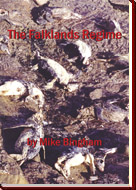
by Mike Bingham
available online or from bookshops world-wide.
ISBN: 1420813757.


Cabo Virgenes penguin colony, Argentina
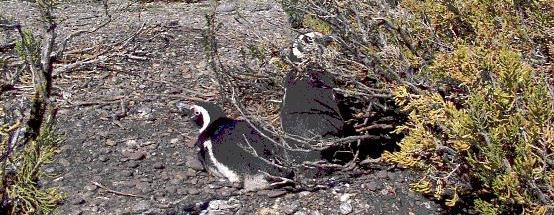
Cabo Virgenes is one of the largest Magellanic penguin colonies in Argentina, with a current population of about 130,000 breeding pairs. It is also one of our long-term study sites, where we study population trends, breeding success, chick mortality and the effects of tourism. With Park Wardens protecting the site, and our studies monitoring the effects of tourism, tourists can be confident that they are not harming the wildlife which they come to visit. A no-fishing zone placed around the colony also helps to ensure that the penguins' food resources are not depleted by commercial fishing, as they are in the Falkland Islands. See articles below:
Falklands Penguins Starve to Death.

The reward for all this protection has been a rapid increase in population size over the last few years. In the 1990s, prior to the ban on commercial fishing, the Cabo Virgenes colony stood at 90,000 breeding pairs. Our census of 2003 showed a rapid increase to 120,000 breeding pairs in response to the ban on commercial fishing, and our 2013 census shows further population increase to its current population of 130,000 breeding pairs.
Magellanic penguins are only found in this region of the world. Their entire global population is spread over just three countries, Argentina, Chile and the Falklands. Both Argentina and Chile protect penguins from commercial fishing and have increasing populations. The Falklands refuses to protect penguins from commercial fishing and has experienced a 90% decline since the establishment of the Falklands fishing industry in 1988. The Falkland Islands is the ONLY country in South America that refuses to protect penguins from commercial fishing (see www.falklands.net).
Comparisons below with data from the Falkland Islands, highlights the problems faced when food resources are diminished by commercial fishing boats, operating within 30km of Magellanic penguin breeding sites.
Fishing within 30km of Penguins: ARGENTINA no / FALKLANDS yes
Population: ARGENTINA 44% increase over 20 years / FALKLANDS 90% decline over 20 yrs
Breeding Success (chicks per pair): ARGENTINA 1.3 / FALKLANDS 0.5
Foraging Duration: ARGENTINA 18 hours / FALKLANDS 34 hours
Fledging Weights: ARGENTINA 3.1 kgs / FALKLANDS 2.6 kgs
Fledging Survival to Adulthood: ARGENTINA ~ 20% / FALKLANDS ~ 1%
You can support our work to protect penguins by adopting a penguin. Visit our Adopt-a-Penguin page for further details.
Our work was initially funded by the British government through their Darwin Initiative Programme, a project which provides three years funding to help conservation projects become established and self-financing. Since 2004 our work has been entirely funded by our adopt-a-penguin program, so the more adoptees we have the more we can do for the penguins.
.